Top Secret Notes On…

free ideas and ways to do things… follow at your own risk

Planing lesson

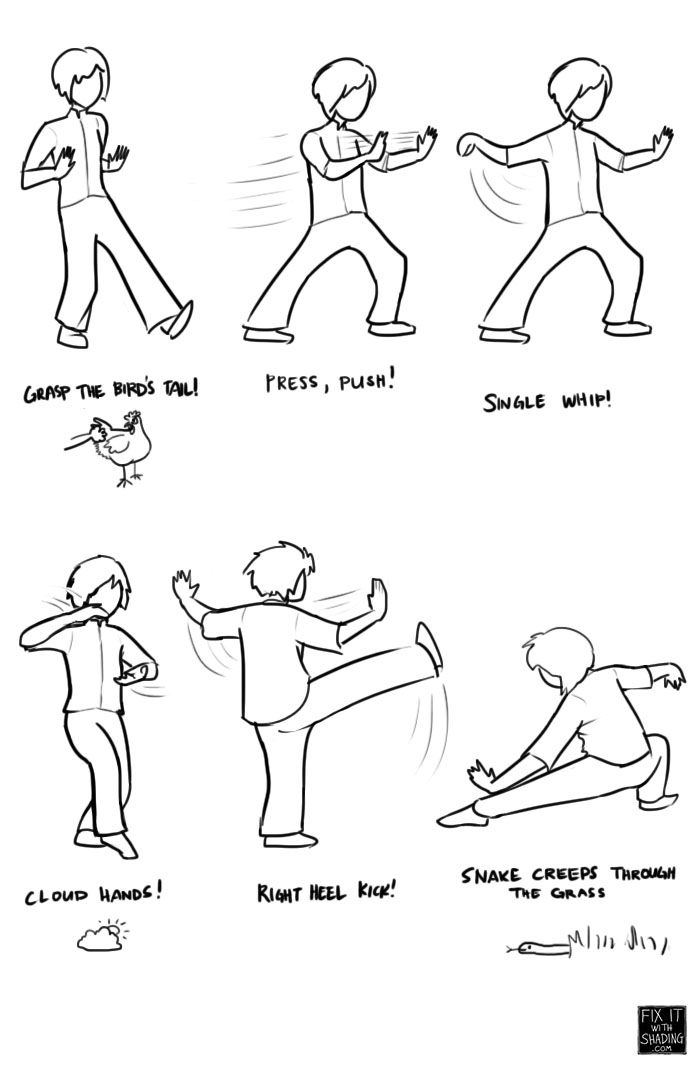
I shall open with some Plain ol’ Taichi moves:
plain ol' taichi steps

BUT WAIT! That looks familiar!
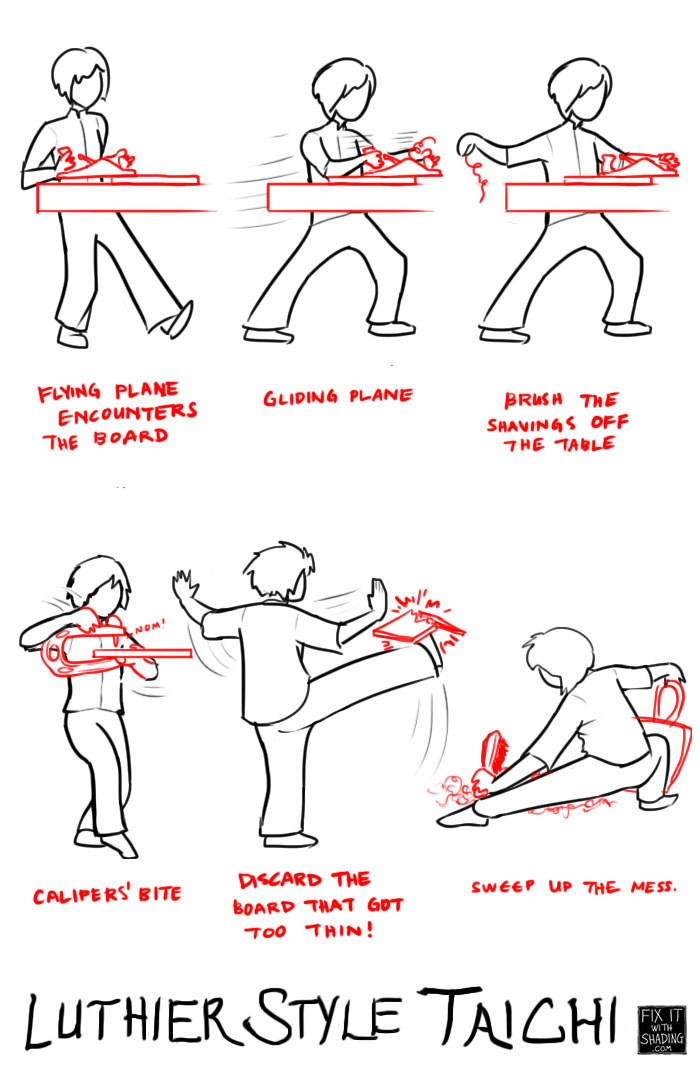
Compare with Plane ol’ Taichi moves:

plane ol' taichi steps, luthier style

When you plane, you’ve got to MOVE YO’ BODY!!! … and not forget to breathe and concentrate and stuff, etc etc.

But really, planing taichi-style puts the strength of your legs and the weight of your torso behind the plane, which will slow down arm fatigue and let your arms focus on controlling the plane. So, today’s lesson in review:

shaolin planing vs. cabbage patch planing

You don’t even need the check mark and X to tell you which is the right way – obviously you’d choose Shaolin Planing because it makes you look way cooler. But make sure you’ve got good footing, or else:

kung fu planing gone wrong

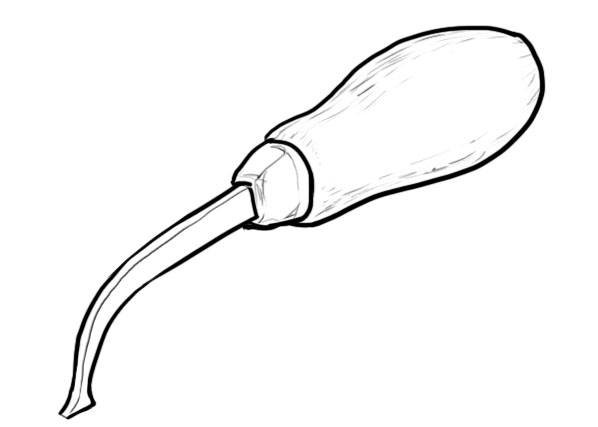
purfling pick

Those double black lines on your violin are not drawn in decorations. They come from this:

DSC02301

That purfling strip gets bent with an iron and stuffed into a channel, which we cut out with knives and pick out with this:

26 purfling pick 1

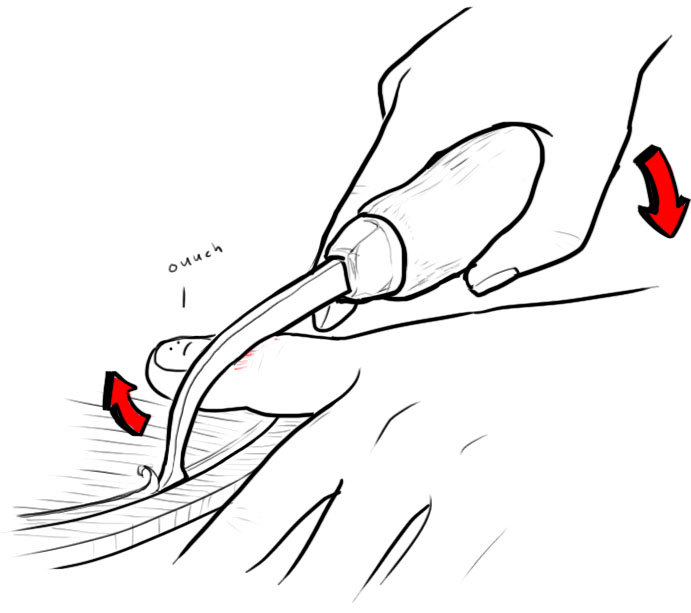
And in the process, we smash our left thumbs with the hard tempered metal of the purfling pick.

26 purfling pick 2

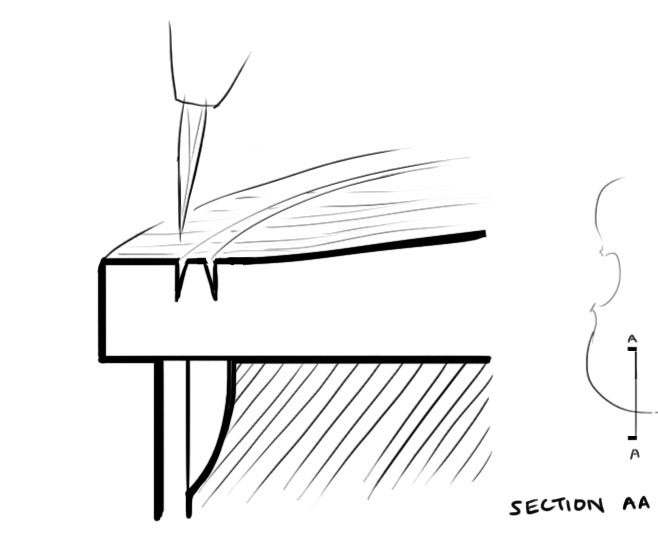
We knife two lines, 2mm deep, but there’s no real way of knowing how deep we’ve cut other than guessing by eyeballing how far down the tip of your knife has gone. Also, keeping that channel perpendicular to the surface is no easy task!

26 purfling pick 3

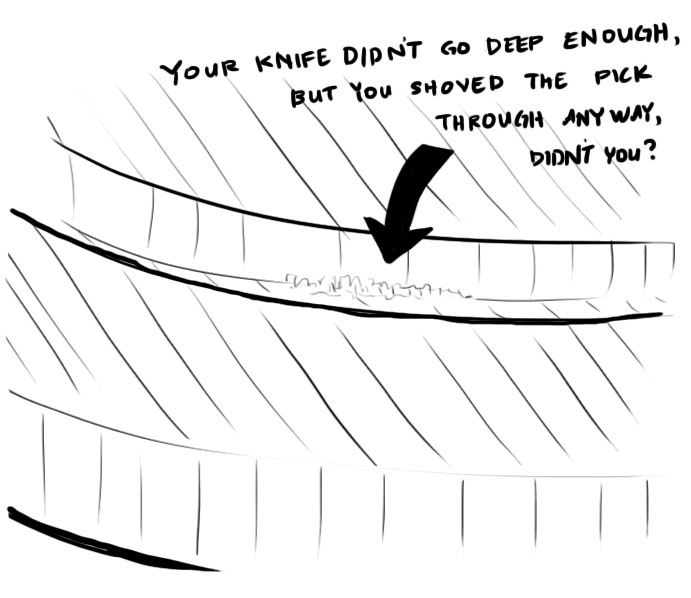
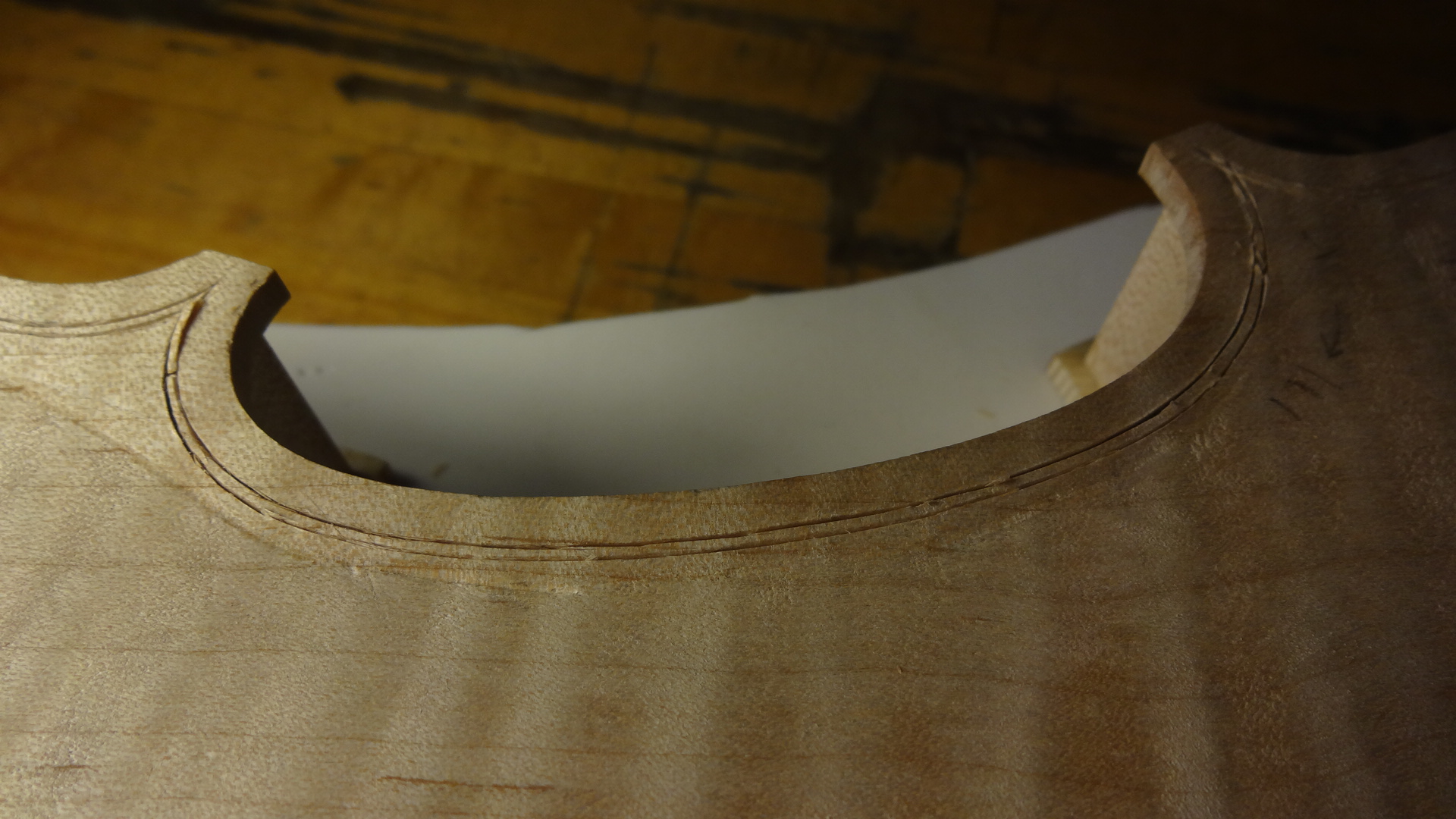
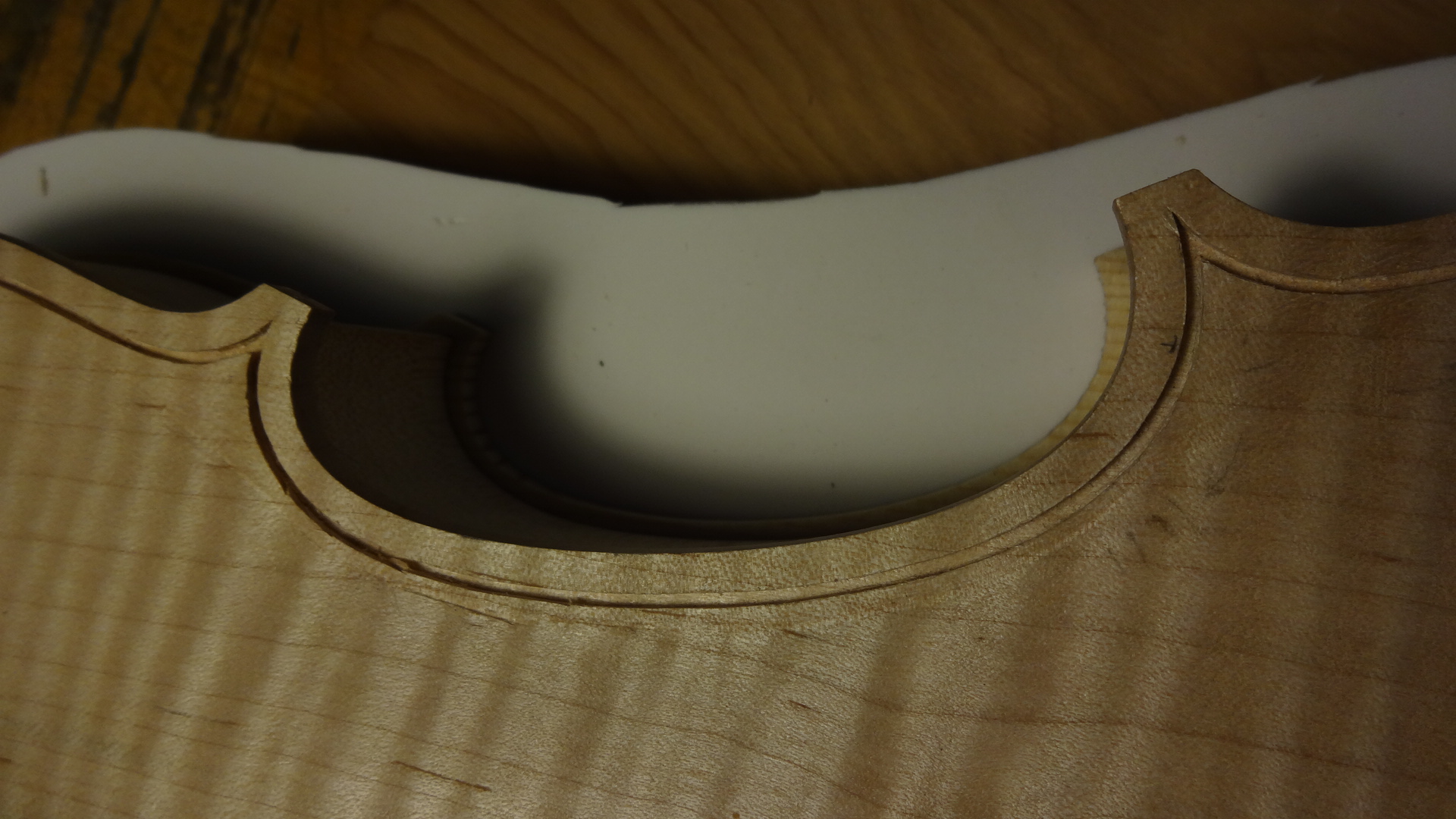
So when picking out the channel, you sometimes come across a spot where your knife didn’t reach, and the channel is unclean.

26 purfling pick 4

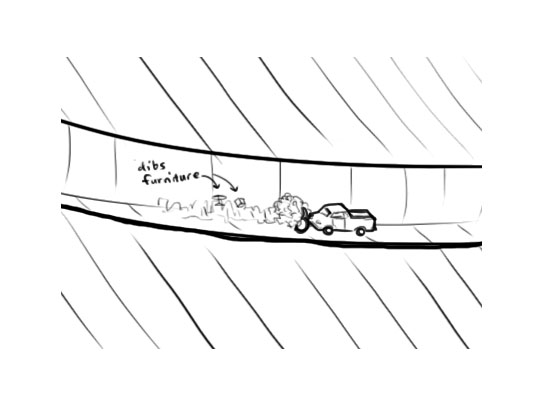
But wait… that looks familiar.

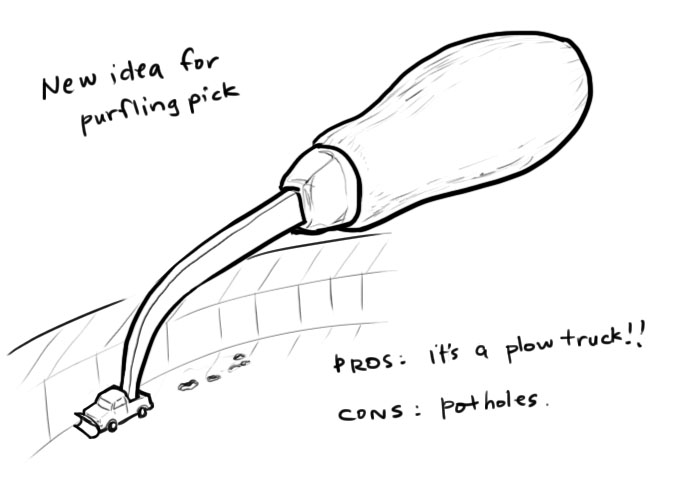
26 purfling pick 5I have an idea!!!!26 purfling pick 6

Okay here is the update on violin #1:

knifed:

DSC02291

picked:

DSC02307

purfled:

DSC02341

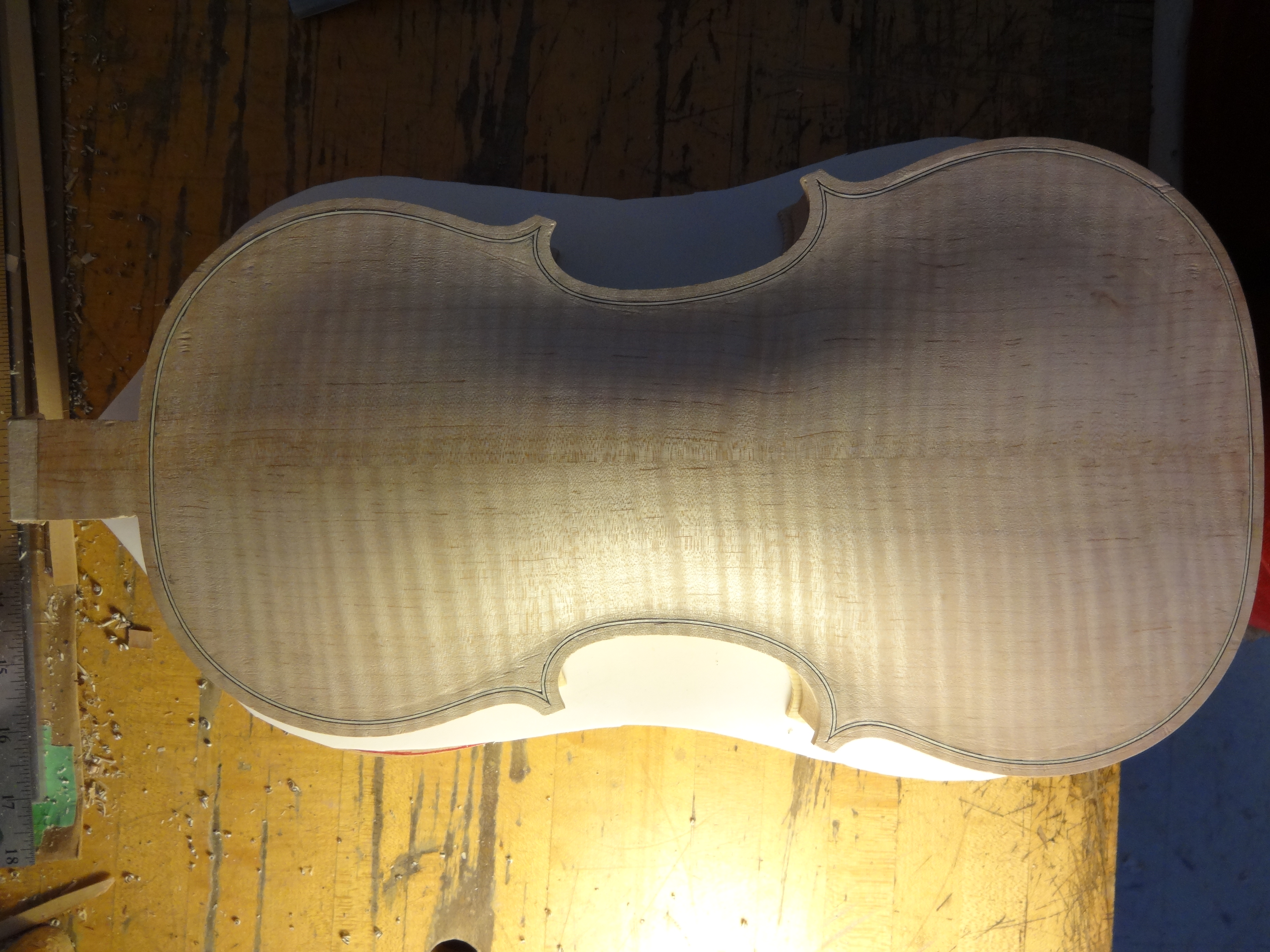
maple back with purfling all glued in:

DSC02401

mobile chicken coop

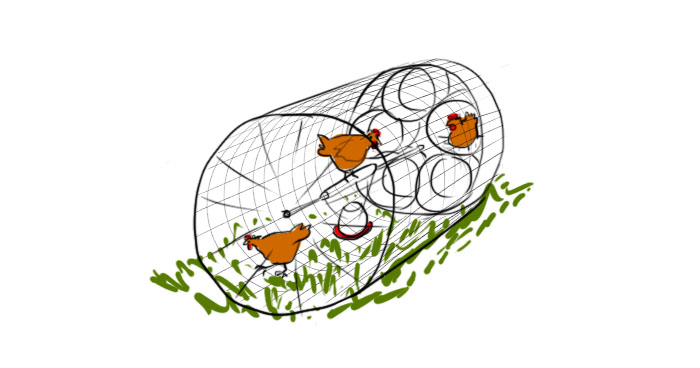
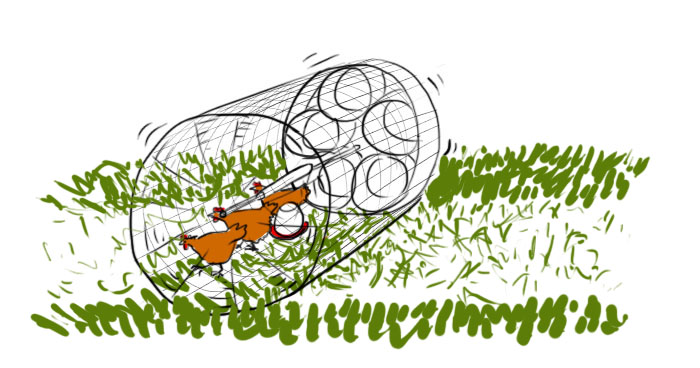
Option 1: “Chicken Wheel”

Why should hamsters get all the fun?

mobile chicken coop - wheel

does this count as free range?
note: not recommended for people who live on a hill, or people who have swimming pools.

mobile chicken coop rolling in action

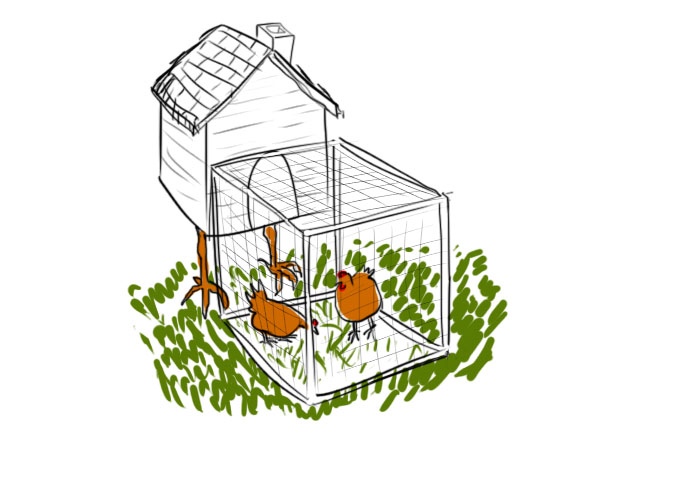
Option 2: “Space Module”

for those who want to restrict the chicken’s path, or want crop circles.

mobile chicken coop option 2 "space module"

unrelated option: “the baba yaga”

mobile chicken coop "the baba yaga"

flattening, flattening, and more flattening

i know an old lady, violin maker's edition

New kids have arrived at my school (CSVM), and they are all scrubbing their stones to flatten their stones to flatten their plane soles and sharpen their blades to flatten their first pieces of spruce to make linings. Reminded me of that cumulative song, I know an old lady who swallowed a fly. So here, I present you the violinmaker’s version:

I know an old lady who flattened her straightedge,
but I don’t know how she flattened her straightedge.
She flattened her straightedge to flatten her marble,
she flattened her marble to flatten her whetstone
she flattened her whetstone to flatten her plane sole
she flattened her plane sole to flatten her jointer
she flattened the jointer to flatten her plate edge
but gave it a hollow against her straightedge,
And then she glued.

Note: I confess I took various liberties in accuracy to make the song work better: We do not flatten our straightedges – the way to keep a straightedge flat is… never ever drop it ever. And although we don’t flatten our marbles, we do wiggle our straightedges all over them to find high spots! Oh, and we do not flatten our stones on the marble, though it’s fine to do it that way.

hammer time

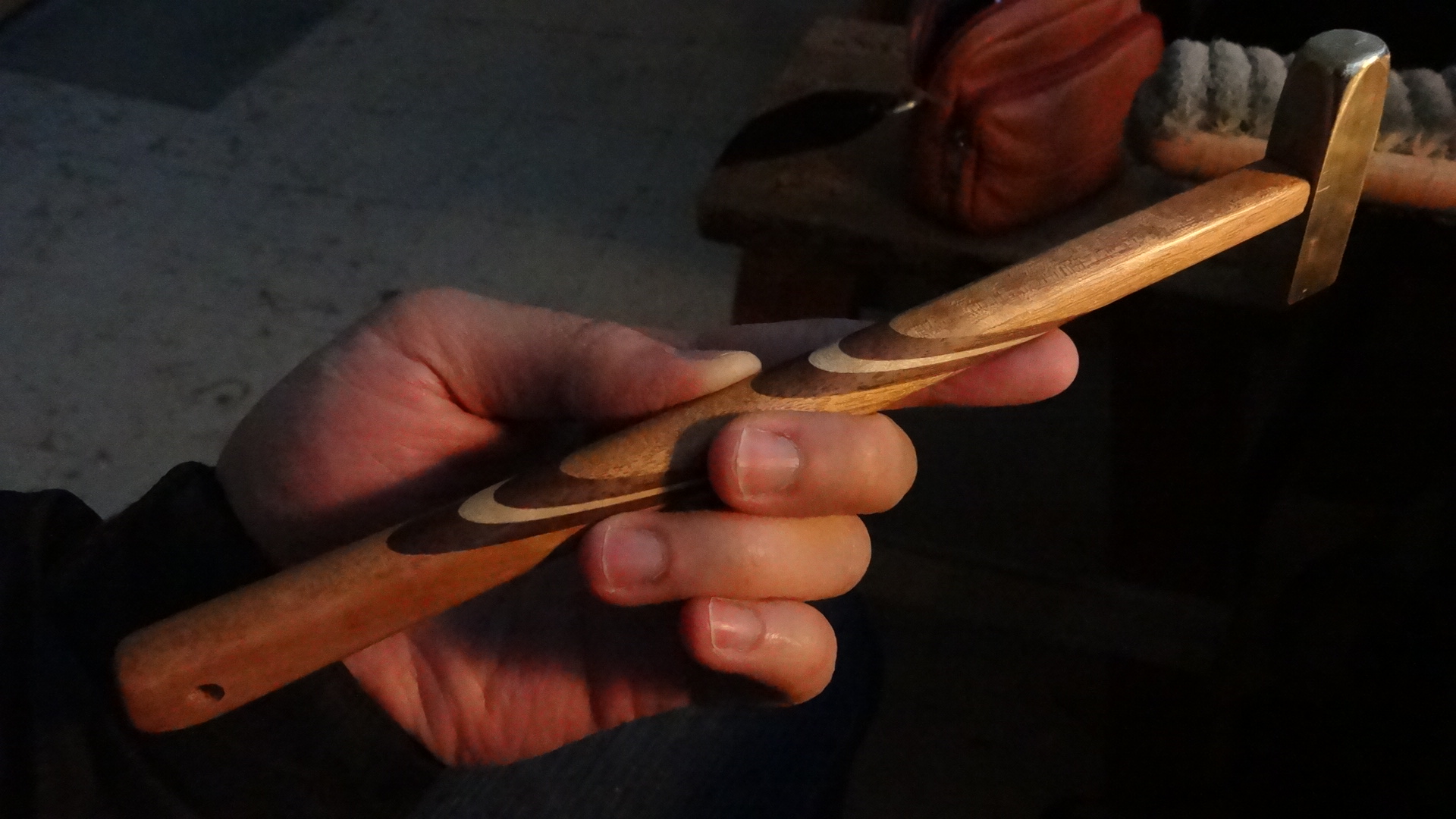
brass hammer!

I made a brass hammer!

It is mystery cherry + walnut + maple, made out of leftover slivers of wood from my knife handles. Rounding the stick gives it the saturn rings.

By now, surely you want one too! Well here, I generously offer you instructions on making your own from the Great Violinmaking Notebook of MJ. Steps for laminating your own peanut butter cup racing stripes not included.

hammer-making instructions

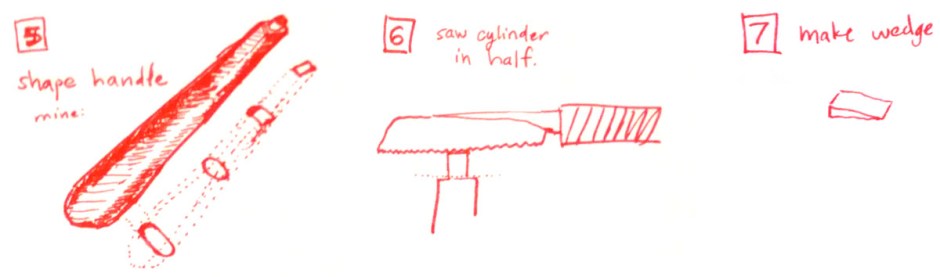
Normal people would use a stick of some nice hard wood that won’t break as you’re banging the hammer around. Abnormal people like me will add several steps of laminating little thin pieces of wood to achieve chocolate stripes. The length of the handle will depend on your hammer head. For my little ~1 cm hammer head, I suggest a handle around 20 cm long.

Score the stick to prevent tearout as you shape the end into a cylinder. The score line should be where the hammer head will sit.

Shape the end into a cylinder to fit the opening of the brass hammer head. Shave corners off up to the score line, alternating between scoring and removing material.

Stop when the shaped end can fit through the narrowest opening in the hammer head (my hammer head had a tapered hole drilled into it).
hammer-making instructions

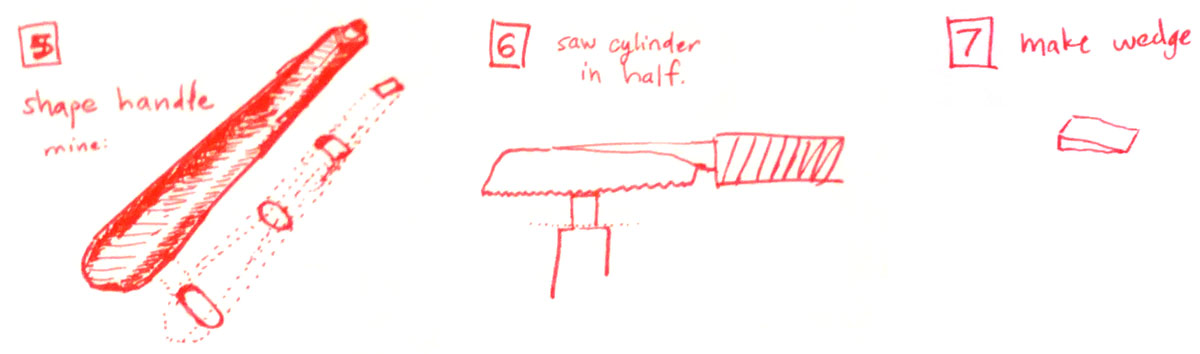
Shape the handle. I did not want mine completely round, but I wanted it round enough to make the cool effect with the rings. The result was flat ends blending with a round middle.

Saw the cylinder in half.

Make a wedge. It should be wide enough to make up the difference between the two ends of the hammer head’s tapered opening.

hammer-making instructions, part 3
Mix epoxy. Even if you made a very snug joint, as long is it’s a cylinder, the hammer head will eventually want to spin on the handle. So we must fix it in place with epoxy.

Put epoxy in brass hammerhead hole.

Insert stick, clean off goopy mess. It should have squeezed some goo out.

Insert the wedge to pry the two halves of the cylinder apart, causing it to fill up the bigger end of the tapered hole.

Let it set for however long your epoxy’s instructions tell you it should sit for.
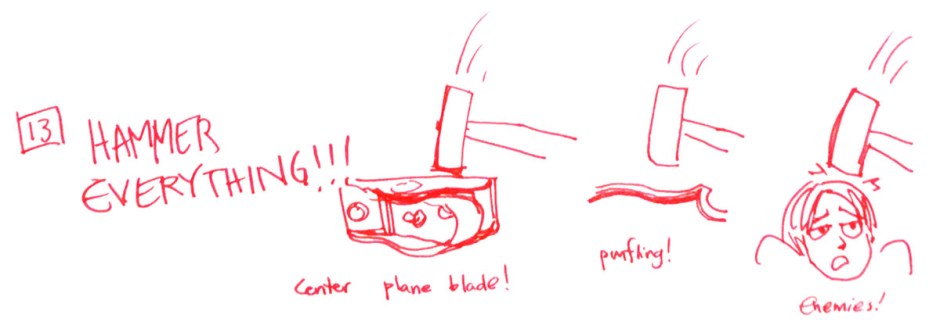
Final step: HAMMER EVERYTHING!!!